In object-oriented programming, objects are modeled to real-world objects.
A real-world object has actions related to it and characteristics of its own.
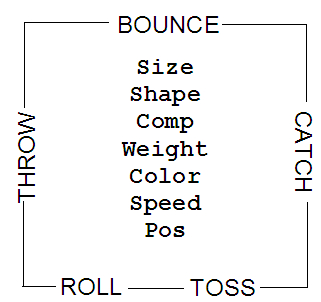
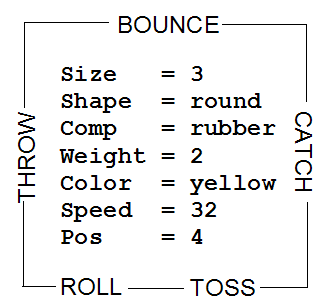
Take a ball, for example. A ball can be acted on—rolled, tossed,
thrown, bounced, caught. But it also has its own physical characteristics—size,
shape, composition, weight, color, speed, position. An accurate data model
of a real ball would define not only the physical characteristics but
all related actions and characteristics in one package:
In object-oriented programming,
objects are the basic building blocks—the fundamental units of data.
There are many kinds of objects; for example, character
strings, collections, and input and output streams. An object—such as
a character string—always consists of two parts: the possible actions
or operations related to it, and its characteristics or variables. A variable
has a
name, and an associated data value
that can change over time.
The variables represent the internal state of the object, and can be directly
accessed only by the code that implements the object's actions.
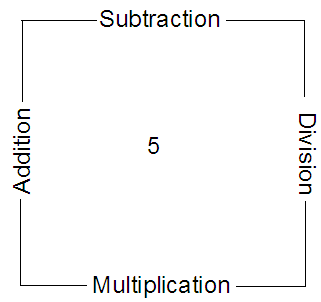
To access an object's data, you must always specify an
action. For example, suppose the object is the number
5. Its actions
might include addition, subtraction, multiplication, and division. Each of
these actions is an interface to the object's data. The data is said to
be
encapsulated
because the only way to access it
is through one of these surrounding actions. The encapsulated internal
characteristics of an object are its
variables. The variables are associated
with an object and exist for the lifetime of that object: