
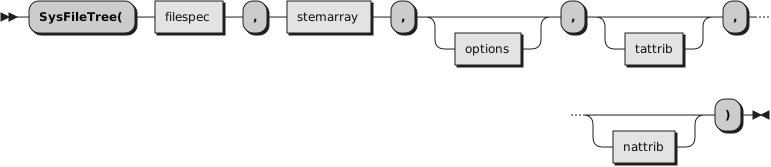
*.bat, or ../../*.sh,
or c:\temp.
Windows supports wildcard characters * and ?,
Unix-like systems additionally support character classes in [ ]
brackets, including - for ranges and
! for negation.
.0
is set to n, the number of matches returned,
and the matching files or directories are returned in
stem.1 to
stem.n.
B.
BDFHILYYYY-MM-DD HH:MM:SS.
OSTYY/MM/DD/HH/MM.
If the L option is also specified
then this option will be ignored.
*****.
This returns all files regardless of the settings (clear or set) of the Archive,
Directory, Hidden, Read-Only, and System attributes. The target mask attributes
must appear in the order ADHRS. This argument is Windows only. It is allowed but ignored on Unix-like
systems.*+-***+*+**+**++**---+-*****. This means not to change the
Archive, Directory, Hidden, Read-Only, and System attributes. The target mask
attributes must appear in the order ADHRS. This argument is Windows only. It is allowed but ignored on Unix-like
operating systems.*+-***+*-**+*+*+++-----/* Find all subdirectories on C: */
call SysFileTree "c:\*.*", "file", "SD"
/* Find all executable (.exe) files under Program Files*/
ret = SysFileTree('C:\Program Files\*.exe', f, 'FS')
/* Find all Read-Only files */
call SysFileTree "c:\*.*", "file", "S", "***+*"
/* Clear Archive and Read-Only attributes of files that have them set */
call SysFileTree "c:\*.*", "file", "S", "+**+*", "-**-*"
/****<< Sample Code and Output Example.>>********/
call SysFileTree "c:\win*", file., "b"
do i = 1 to file.0
say file.i -- 3/12/21 1:56p 0 -D--- c:\Windows
end