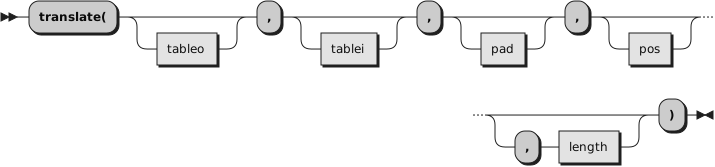
Returns the receiving buffer with each character translated to another
character or unchanged.
The output table is
tableo
and the input translation table is
tablei.
translate searches
tablei for each character
in the receiving buffer. If the character is found, the corresponding character
in
tableo is replaces the character in the
buffer. If there are duplicates in
tablei, the first (leftmost) occurrence is
used. If the character is not found, the original character in the receiving
buffer is unchanged.
The tables can be of any length. If you specify neither translation table and
omit
pad, the receiving string is
translated to uppercase (that is, lowercase
a-
z
to uppercase
A-
Z),
but if you include
pad
the buffer translates the entire
string to
pad characters.
tablei defaults to
XRANGE('00'x, 'ff'x), and
tableo defaults to the null string and
is padded with
pad or truncated as necessary.
The default
pad is a blank.
n is the position of the first
character of the translated range. The default starting position is 1.
length is the range of characters to be
translated. If
length is omitted, the remainder of
the buffer from the starting position to the end is used.